
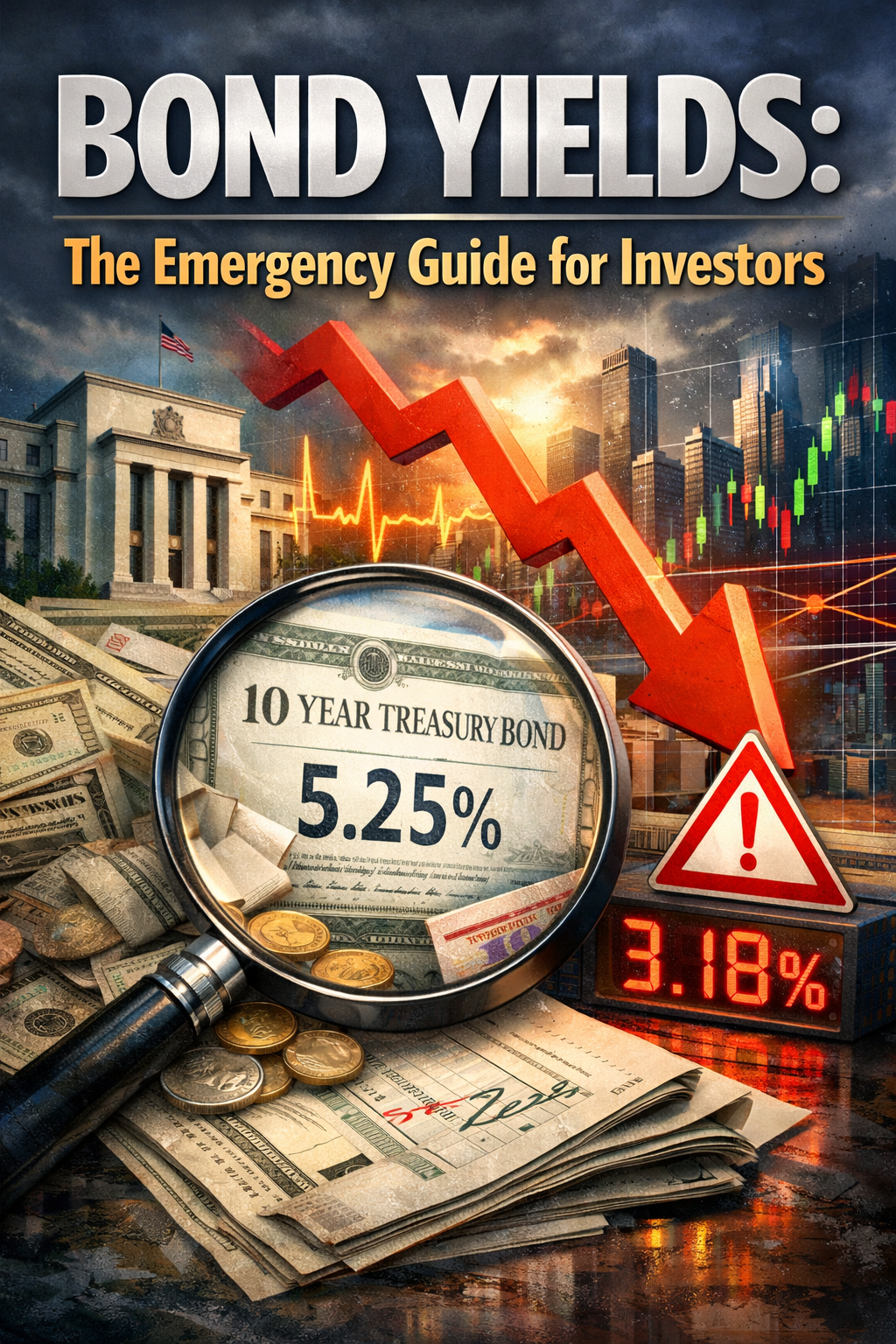
The Hook & Definition of Bond Yields
Bond Yields are an “Emergency” signal that every investor must monitor closely. This percentage represents the return an investor receives on a bond relative to its current market price. Essentially, it is the actual rate of return an investor earns if they hold the bond until maturity. For many seasoned traders, understanding this figure is critical because it reveals market expectations about future interest rates and economic growth. Consequently, when these numbers rise, it typically indicates that money is flowing out of the stock market and into safer fixed-income assets. Conversely, falling Bond Yields often signal economic uncertainty, as investors seek stability. Therefore, mastering the dynamics of these returns is essential for protecting your portfolio from unexpected shocks and identifying crucial shifts in market sentiment.
Visual Impact of Bond Yields on Your Portfolio
To grasp the inverse relationship between stock prices and fixed-income returns, please follow this vertical breakdown:
Rising Bond Yields
=
Increased Demand for Safe Assets
Higher Borrowing Costs for Companies
=
Lower Stock Valuations
This simple visual clarifies how moves in fixed income directly influence your equity holdings, ensuring you remain vigilant.
Real-World Application of Bond Yields
As of [Jan 09], 2026, the 10-year U.S. Treasury note is the most critical benchmark for investors worldwide. According to real-time data from Bloomberg and Yahoo Finance, this figure provides an immediate pulse on the global economy.
Benchmark: 10-Year U.S. Treasury Yield
Current Yield: 4.08%
Impact: Signals future borrowing costs for businesses and mortgages.
Analysis Result: Moderate Yield Environment
A yield around 4% suggests that inflation concerns are somewhat contained, but the cost of money is not exceptionally cheap. This implies a cautious stance from the Federal Reserve, potentially influencing future corporate earnings and equity valuations. You should always cross-reference multiple sources to confirm the latest movements before adjusting your long-term strategy.
The Hidden Truth About Recession Signals
One of the most “Hidden” but alarming signals from the bond market is an inverted yield curve. This occurs when short-term Bond Yields (e.g., 3-month Treasury bills) become higher than long-term yields (e.g., 10-year Treasury notes). Historically, every recession in the U.S. over the past 50 years has been preceded by an inverted yield curve. It signals that investors expect future economic growth to be weaker than current conditions. Consequently, a sudden inversion can trigger panic selling in the stock market as institutions brace for an economic downturn. By monitoring the spread between short and long-term rates, you gain a powerful early warning system that few retail investors understand. This “Truth” can help you reposition your assets to safety long before the mainstream media reports on a recession.
How Bond Yields Impact Specific Sectors
Different sectors of the stock market react uniquely to fluctuations in the cost of money. For instance, growth stocks, particularly in technology and biotech, are highly sensitive to rising Bond Yields. Their valuations often depend on distant future earnings, which are heavily discounted when the cost of capital increases. Conversely, financial institutions like banks tend to benefit from higher yields because it allows them to charge more for loans, thus expanding their net interest margins. Furthermore, utility companies and consumer staples, which are considered defensive, are also impacted. While they offer stability, their appeal can diminish as risk-free bond returns become more attractive. Therefore, understanding these sector-specific sensitivities is key to effective asset allocation.
Investor’s Checklist for Bond Yields
Before making any investment decisions, consider these three critical points about fixed-income returns:
- Yield Curve Shape: Monitor for inversions between short and long-term rates as a recession indicator.
- Inflationary Pressures: High inflation often pushes these numbers higher, making bonds less attractive to hold.
- Central Bank Commentary: Listen to Federal Reserve statements for clues on future monetary policy direction.
Conclusion on Bond Yields
Mastering the complexities of Bond Yields is an indispensable part of a comprehensive investment education. While they may seem less exciting than soaring tech stocks, these indicators provide crucial insights into market sentiment and economic health. By learning to interpret these “Emergency” signals, you can proactively adjust your portfolio to mitigate risks and capitalize on emerging opportunities. We encourage you to continue your learning journey by exploring more advanced economic guides at (https://dailystockpicksai.com/category/stock-market-education/). Building a robust investment strategy requires a holistic understanding of all major financial instruments. Staying informed with accurate, cross-verified data is the only way to safeguard your financial future in the dynamic markets of 2026.