
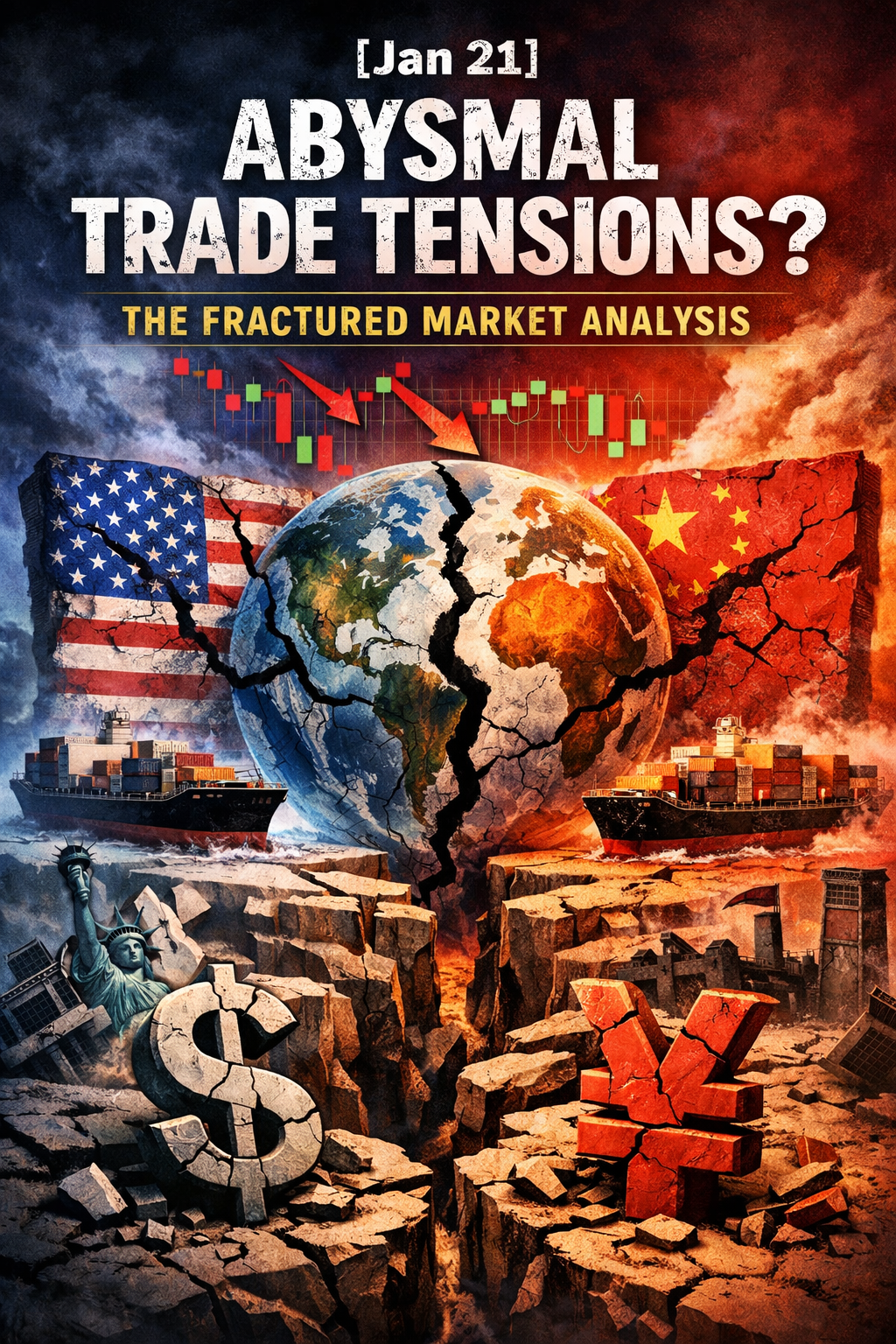
The purpose of this post is to summarize the complex movements of the U.S. stock market with a data-centric approach to identify dominant themes and help readers proactively establish strategies for the next trading day. On January 20, 2026, the global Analysis of market performance revealed a dramatic pivot toward risk aversion. Following a long holiday weekend, investor sentiment plunged into the “Fear” zone. This shift was triggered by intensified rhetoric surrounding President Trump’s tariff policies. Furthermore, a sobering warning from the IMF regarding the AI bubble added to the pressure. Accordingly, market participants are now engaging in broad-based risk-off maneuvers. They are prioritizing liquidity over growth as the threat of a U.S.-EU trade war looms large.
1. Market Snapshot Analysis Summary
According to the latest aggregated real-time data from Yahoo Finance and Investing.com, the major U.S. indices faced significant downward pressure during Tuesday’s session:
- S&P 500: 5,892.14 (-1.35%) — Pierced key support levels amid trade anxiety
- Nasdaq Composite: 18,620.45 (-1.68%) — Tech giants hammered by AI bubble warnings
- Dow Jones Industrial Average: 43,124.80 (-1.10%) — Blue-chips weighed down by manufacturing fears
- CBOE Volatility Index (VIX): 19.45 (+12.4%) — Fear gauge jumping as uncertainty intensifies
The Analysis of today’s movement shows it was accompanied by a surge in trading volume. This indicates strong conviction in the sell-off. Moreover, the S&P 500’s decline was broad. Specifically, nearly 80% of its constituents finished in the red. This technical breakdown suggests that the market is entering a corrective phase. Therefore, investors are re-evaluating the sustainability of recent gains under new geopolitical and economic constraints.
2. Core Drivers of Market Analysis
- Trump Tariffs and the U.S.-EU Trade War: The primary driver of today’s Analysis was the heightening concern over President Trump’s aggressive tariff proposals. In particular, the prospect of a full-scale trade war with Europe has ignited fears of massive supply chain disruptions. For S&P 500 companies with international exposure, this translates to a potential collapse in profit margins. Thus, investors are pricing in the “worst-case scenario.”
- IMF Warning on AI Investment “Overheating”: In addition to trade fears, the International Monetary Fund (IMF) issued a stern warning. They stated that current AI investment levels are “excessive.” This report has sparked a massive valuation adjustment in technology stocks. As a result, investors are rushing to the exits. They fear that the tech sector’s growth trajectory has been over-hyped.
- Risk Aversion and Supply Chain Fragility: The combination of trade conflict and valuation concerns has triggered an “extreme risk-off” sentiment. Supply chain instability is now an immediate pricing factor. As reported by Reuters, the possibility of retaliatory measures is forcing a fundamental reassessment. Consequently, global earnings forecasts for 2026 are being revised downward.
3. Apple Inc. (AAPL) Analysis
- Highlight: Apple saw significant downward movement, dropping 2.45% to close at $226.12. As a company with a complex global supply chain, AAPL is highly vulnerable. According to Bloomberg, potential retaliatory tariffs could severely impact its Q3 guidance. Therefore, many institutional holders are choosing to trim their positions. The Analysis indicates that the stock is testing its 100-day moving average.
4. Nvidia (NVDA) Analysis
- Highlight: Nvidia (NVDA) plummeted 3.12% today. This happened as the IMF’s warning directly hit the hardware sector. After months of growth, NVDA is facing a sharp liquidity drain. MarketWatch reported that short-term valuation is coming under intense scrutiny. Consequently, high-frequency traders are flipping from long to short. Our Analysis suggests a period of cooling is necessary for the stock’s health.
5. Caterpillar Inc. (CAT) Analysis
- Highlight: Caterpillar (CAT) fell 1.98% during the session. The manufacturing giant is sensitive to trade war rhetoric. Protectionist policies pose a dual threat to its business. On one hand, raw material costs may rise. On the other hand, export demand could weaken. Thus, the Analysis of CAT reflects broader industrial concerns regarding the new administration’s trade stance.
6. Actionable Strategy and Analysis Outlook
The current Analysis suggests that the “easy money” phase has ended. The S&P 500 is now testing its 50-day moving average. If this level fails, a deeper correction may follow. For the next trading session, investors should remain defensive. We recommend increasing allocations to utilities. These sectors act as natural hedges.
Furthermore, moving toward value-oriented stocks with domestic revenue is a prudent move. To stay ahead of these rotations, visiting DailyStockPicksAI is recommended. The market will likely remain in a high-volatility regime for now. In this environment, capital preservation must be the top priority. Our final Analysis indicates that the 5,800 level for the S&P 500 is the next major support zone to watch.