
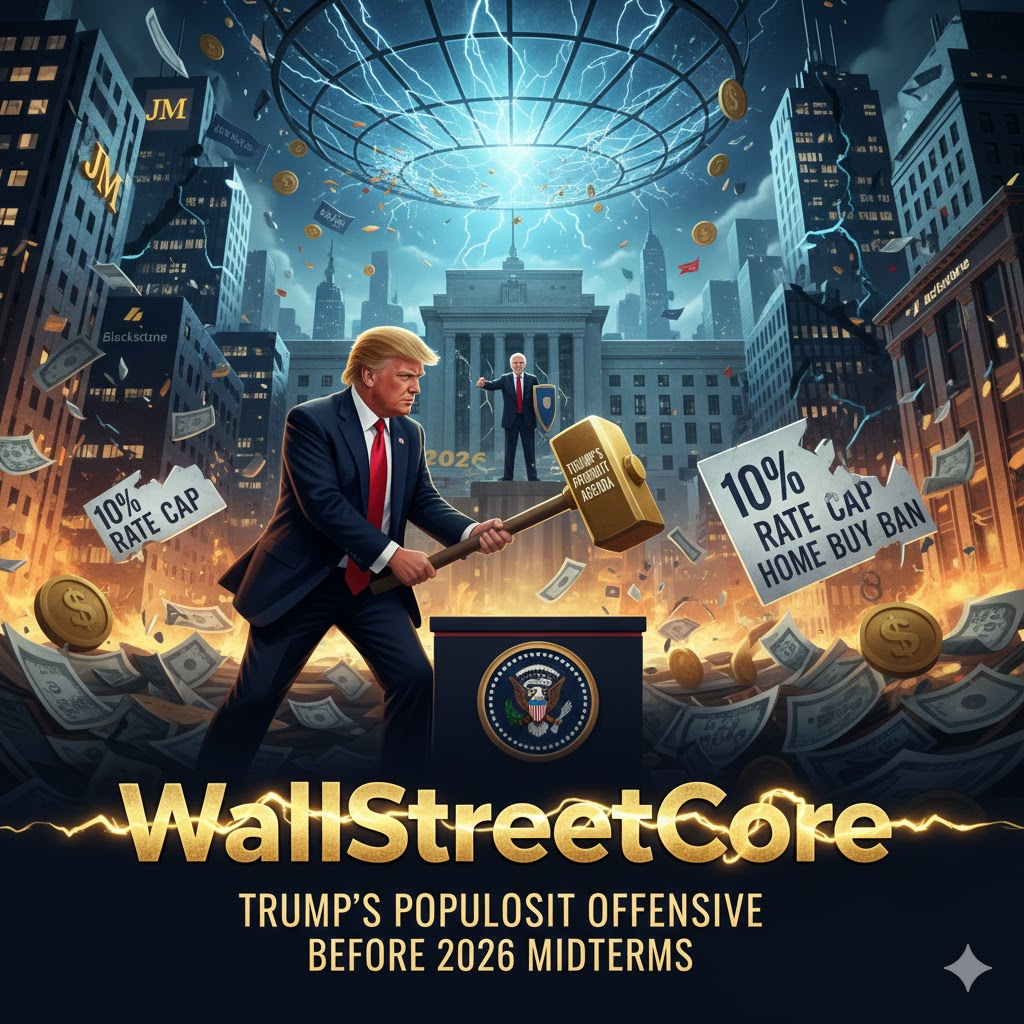
To begin with, the global financial landscape is shifting rapidly under the new WallStreetCore initiatives. Specifically, President Trump has launched a massive offensive against major financial institutions. Consequently, this development has introduced a fresh wave of strategic rebalancing into the market. Institutional players are now meticulously scanning for alpha in this new populist environment. You can monitor the real-time impact on market indices and bond yields through Yahoo Finance (https://finance.yahoo.com).
Donald Trump
The latest WallStreetCore strategies have shifted toward a direct confrontation with institutional investors. President Trump recently signed an executive order targeting large hedge funds at Davos. He specifically banned institutional investors from purchasing single-family homes. This move aims to lower housing costs before the 2026 midterm elections. Furthermore, his administration announced a 10% cap on credit card interest rates. This policy aims to alleviate consumer debt burdens for voters. These measures reflect a high-stakes effort to stabilize his approval ratings. In addition, Trump reached a “framework deal” for Greenland to avoid European tariffs.
Jerome Powell
On the other hand, a profound WallStreetCore conflict is emerging between the White House and the Fed. The administration has escalated its pressure on Fed Chair Jerome Powell. The Justice Department issued a subpoena related to Fed building renovations recently. However, Powell issued a formal statement asserting that the Fed’s independence is under threat. He clarified that recent interest rate decisions were based on economic data. Institutional sentiment remains strongly behind Powell as global central banks support him. Therefore, the optimistic “soft landing” narrative is currently being stress-tested by political friction.
Jamie Dimon
Moreover, the current WallStreetCore reflects growing friction between the administration and banking leaders. JPMorgan CEO Jamie Dimon warned that political interference could lead to higher inflation. Dimon argued that the credit card rate cap would dismantle the banking sector. In response, Trump dismissed these concerns and labeled the bank leaders as out of touch. This verbal sparring underscores a widening rift between Washington and Wall Street. Consequently, investors are moving toward defensive assets to avoid political fallout. Moving forward, the focus remains on whether these populist policies will trigger a credit crunch.
S&P 500
The S&P 500 experienced its worst daily decline recently due to tariff fears. However, the index gained 1.2% today as de-escalation signals emerged from Davos. According to Yahoo Finance (https://finance.yahoo.com), the market is navigating a complex geopolitical landscape. Mega-cap tech stocks led the recovery after the initial sell-off. While volatility remains high, institutional buyers are selectively entering the market again. The WallStreetCore suggests that diplomatic resolutions regarding Greenland are supporting this bounce. In conclusion, the market’s ability to hold support will be a key signal.
Goldman Sachs
In addition, WallStreetCore reports from Goldman Sachs suggest that deregulation remains a primary catalyst. Analysts estimate that the administration’s mortgage plan could lower loan costs slightly. But, they noted that supply constraints remain the primary driver of high prices. The firm warns that high tariffs present a significant downside risk to growth. For more detailed institutional analysis, visit Goldman Sachs (https://www.goldmansachs.com). Therefore, the bank is recommending a balanced approach for the upcoming quarter. This research is vital for understanding the current WallStreetCore trends.
💡 WallStreetCore: Investor Outlook
In summary, the current WallStreetCore is defined by a populist war on big institutions. Moving forward, investors should prioritize liquidity and focus on industries with structural moats. The 2026 midterm elections are forcing the administration to prioritize “affordability” over traditional deregulation. Navigating this WallStreetCore requires a disciplined eye and defensive hedges. Expect continued sector rotation as the administration pushes its populist agenda. Visit DailyStockPicksAI for more updates: https://dailystockpicksai.com/